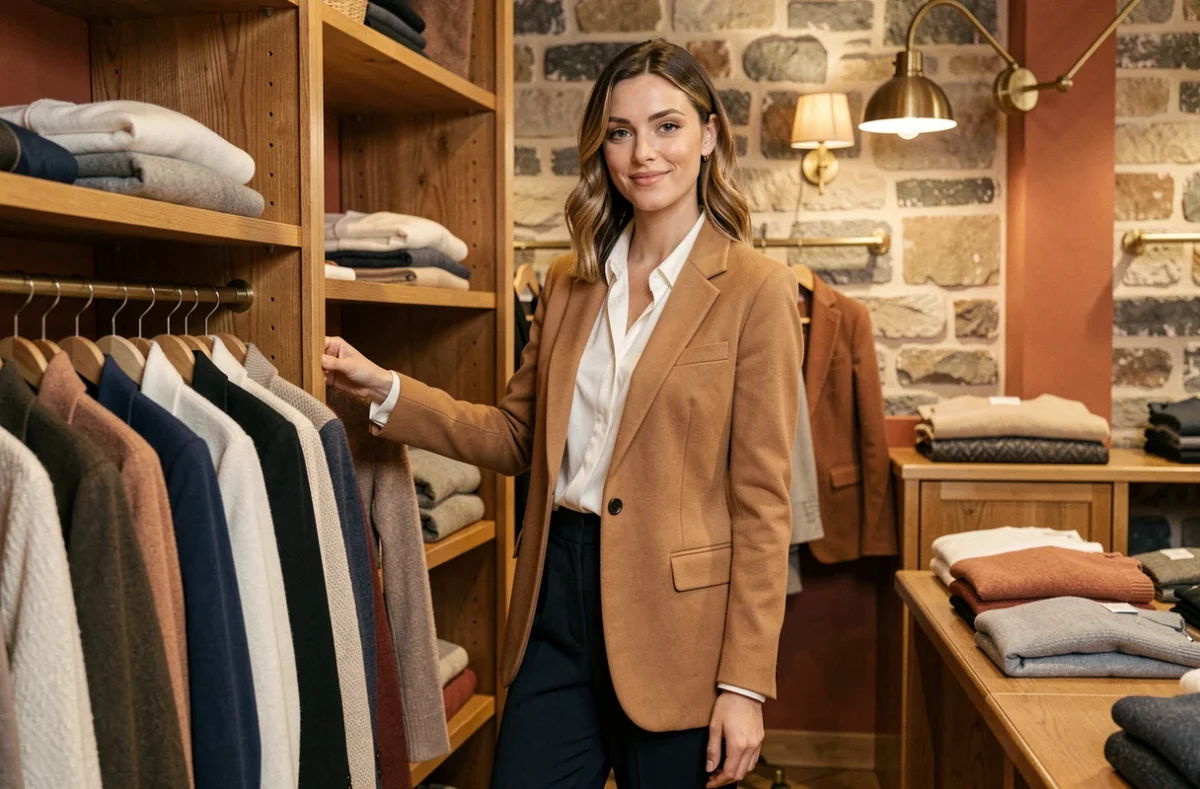
Everyday elegance depends less on how many items are in your wardrobe than on how well each garment works with the others, lasts for several seasons and is easy to care for. Since October 1, 2025, French brands have been able to display a regulated environmental cost for their textile products, calculated using the Ecobalyse tool.
This display is voluntary, but it offers a practical way to make choices beyond cut or color. In practice, creating an elegant style starts with understanding what makes a garment versatile and dependable over time.
Repairability and finishing: the filter fashion trends ignore
Most style guides focus on color combinations or the silhouettes of the moment. They overlook a factor that determines how long a garment will actually last: how easy it is to care for and repair.
Before buying a garment, inspecting the inside finishing can offer reliable clues. Neatly overlocked seams, buttons secured with fabric reinforcement, a lining sewn flat rather than glued: these details are invisible when worn, but determine whether a local tailor can alter or repair the garment.
The European Ecodesign Regulation sets out specific requirements for textiles, but these still need to be clarified in a subsequent act, with 2027 as an indicative deadline. Until these future standards are in place, checking the care instructions on the label remains the most practical step. A garment that can be machine-washed at 30 °C without requiring dry cleaning will cost less to maintain over five years than a delicate item worn for just two seasons.
For more on this approach and ideas for combinations that stand the test of time, Paris Astuce’s fashion tips offer useful guidance.
An elegant wardrobe with fewer pieces: choose for versatility

The idea of a streamlined wardrobe is nothing new, but putting it into practice can be tricky. Buying less only works if every item you keep can be worn in at least three different outfits.
Three practical criteria can help you assess a garment’s versatility before buying it:
- Does the color go with at least five other items already in your wardrobe without forcing the combination? Neutral shades (navy, ecru, heather gray, khaki) are more likely to meet this condition than bright colors, which call for a wardrobe built around them.
- Can you tuck the garment into trousers, wear it over a skirt or layer it under a jacket without creating awkward bulk? Fabric that is too thick or a cut that is too fitted can limit layering options.
- Can the fabric be quickly ironed, or does it smooth out on its own? A cotton-linen blend, for example, naturally creases but relaxes with wear, while stiff polyester holds on to suitcase creases.
One versatile item can replace three specialized pieces. A lightweight wool blazer works from the office to dinner with a simple change of what you wear underneath. A straight-cut crepe dress pairs with white sneakers in the morning and heels in the evening.
Seasonal colors and trends: tell lasting style from throwaway fashion
Seasonal fashion trends regularly introduce bold colors. Pink in all its shades, for example, has dominated recent spring-summer collections, while burgundy and chocolate tones return every fall and winter. Following these trends is not a problem in itself, as long as you incorporate them without undermining the coherence of your wardrobe.
Keeping trend-led colors to accessories and smaller items limits the risk. A bright pink scarf or a bag in a seasonal shade can update an outfit without requiring you to replace your entire wardrobe the following year. Key pieces (coats, trousers, jackets) are more useful in timeless colors.
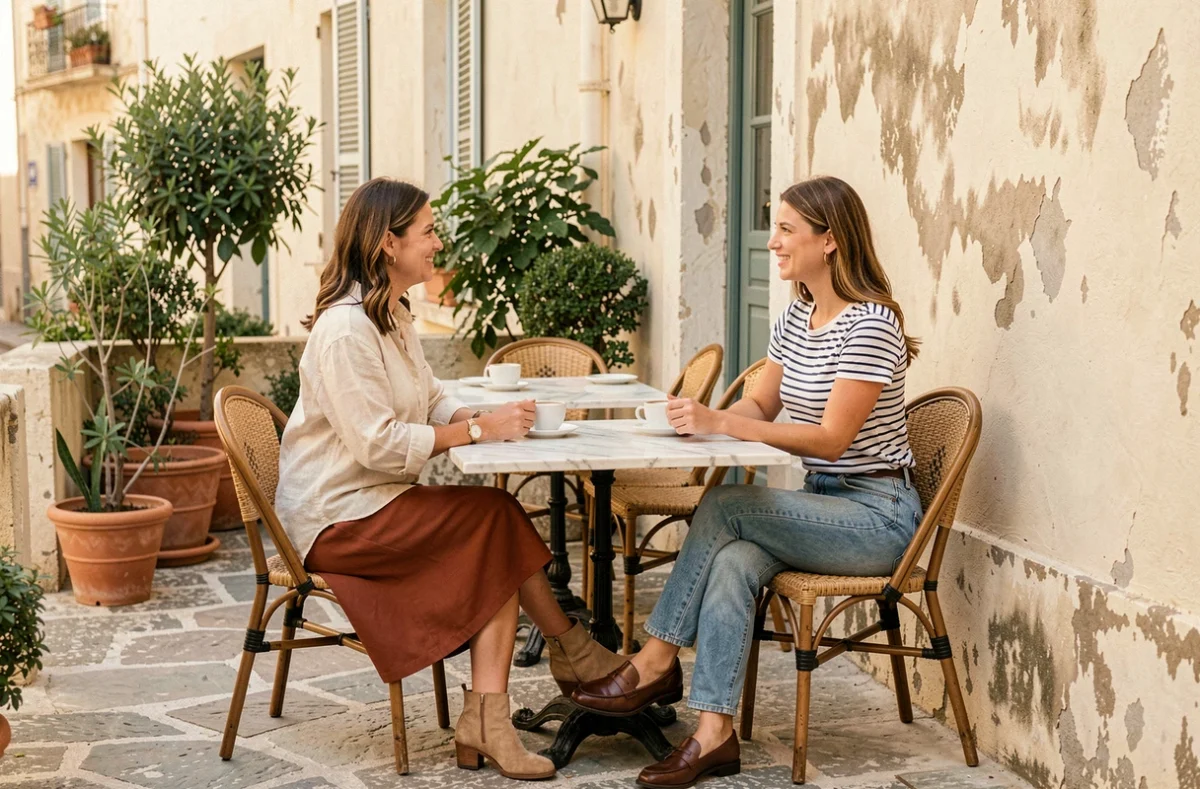
Everyday style also comes down to fabric. Current trends highlight velvet, chunky knits and tactile textures for winter, and linen and breathable cotton for summer. Some of these choices age better than others. Fine corduroy, for example, remains wearable for several winters, while highly lustrous velour can quickly look dated.
Textile environmental labels: look beyond the marketing
The voluntary environmental labeling scheme launched in France in 2025 offers a new way to assess clothing. The calculation method, defined through Ecobalyse, takes several manufacturing and material-related factors into account. When a brand displays this score, it becomes possible to compare similar items using an objective criterion.
The pitfall is confusing this regulated display with self-created labels or vague claims such as “responsible collection.” Only a score calculated using the Ecobalyse method is based on a verifiable framework. Other claims, however well-intentioned, are not based on a public, standardized benchmark.
In addition, new European rules on unsold goods are changing how major brands manage their stock. They can no longer destroy unsold clothing as easily as before. This requirement is prompting some retailers to adjust production volumes or develop resale and reuse channels. For consumers, this means end-of-line sales and clearance events are not going away, but how unsold stock is handled is becoming more tightly regulated.
- Check whether the brand displays an environmental score calculated using a public benchmark (Ecobalyse in France), rather than an in-house label.
- Compare the composition labels: a high proportion of blended synthetic fibers makes a garment harder to recycle in the future.
- See whether the brand shares information about supply-chain traceability, not just the finished product.
Buying less but better is more than a slogan when verifiable comparison tools are available. Everyday elegance depends as much on how well each item fits into your wardrobe as on how long that wardrobe can last without constant replacement. A wardrobe of twenty carefully chosen, repairable pieces that work well together can cover most occasions, from a work meeting to dinner with friends.