Jasmine develops a root system whose shape and depth vary depending on the species, soil type and moisture conditions. Understanding how it grows underground helps you choose the right planting method, container and drainage to encourage regular flowering without risking root suffocation.
Common jasmine and star jasmine: two distinct root systems
Before discussing depth, it is important to make a botanical distinction. The term “jasmine” covers plants that do not belong to the same genus. Common jasmine (Jasminum officinale) is a true jasmine in the Oleaceae family. Star jasmine (Trachelospermum jasminoides) belongs to the Apocynaceae family and is more closely related to oleander than to true jasmine.
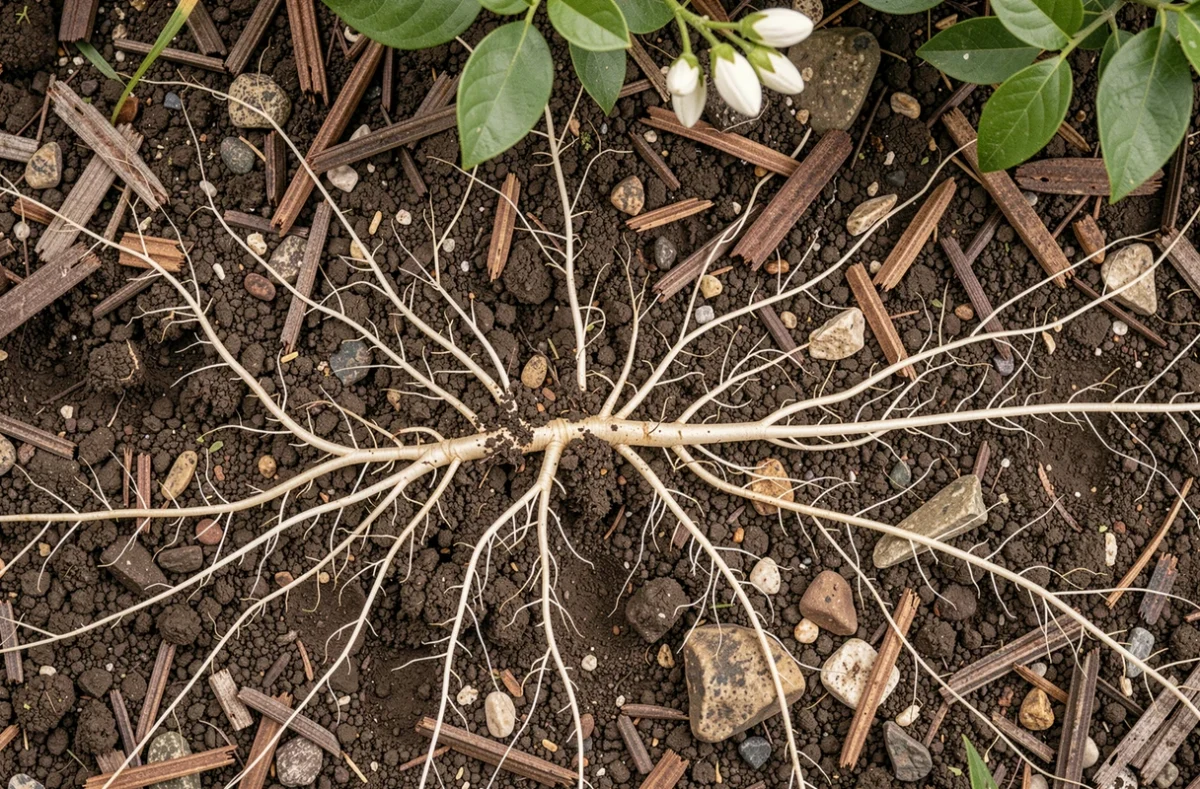
This genetic difference results in different root growth. Common jasmine produces relatively fine, fibrous roots that spread laterally through the topsoil. Star jasmine develops fleshier roots that can anchor themselves in a more compact volume of soil.
Assuming that all “jasmines” have the same rooting depth would be a gardening mistake. It is better to consider each species individually and take the available soil into account. To learn more about jasmine root depth, you should also consider the planting method (in the ground or in a pot) and the texture of the growing medium.
Jasmine rooting depth: what really determines it
No reliable source gives a universal depth for jasmine roots. The reason is simple: depth depends on the soil, not just the plant. Jasmine planted in deep, sandy soil will explore a greater volume than a plant growing in compact clay where water collects.
Three factors influence root growth:
- Soil texture: loose, well-aerated growing medium allows roots to grow down more easily than heavy, compacted soil.
- Drainage: in poorly drained soil, roots stay near the surface to access oxygen, making the plant more vulnerable to wind and frost.
- Available moisture: in soil that is regularly watered deeply, roots follow the water downward. Frequent, shallow watering keeps them in the top few centimetres.
Rather than aiming for a specific depth, the most reliable approach is to prepare the soil to a sufficient depth so the roots can establish without encountering an impermeable layer.
Preparing the planting hole for healthy root growth
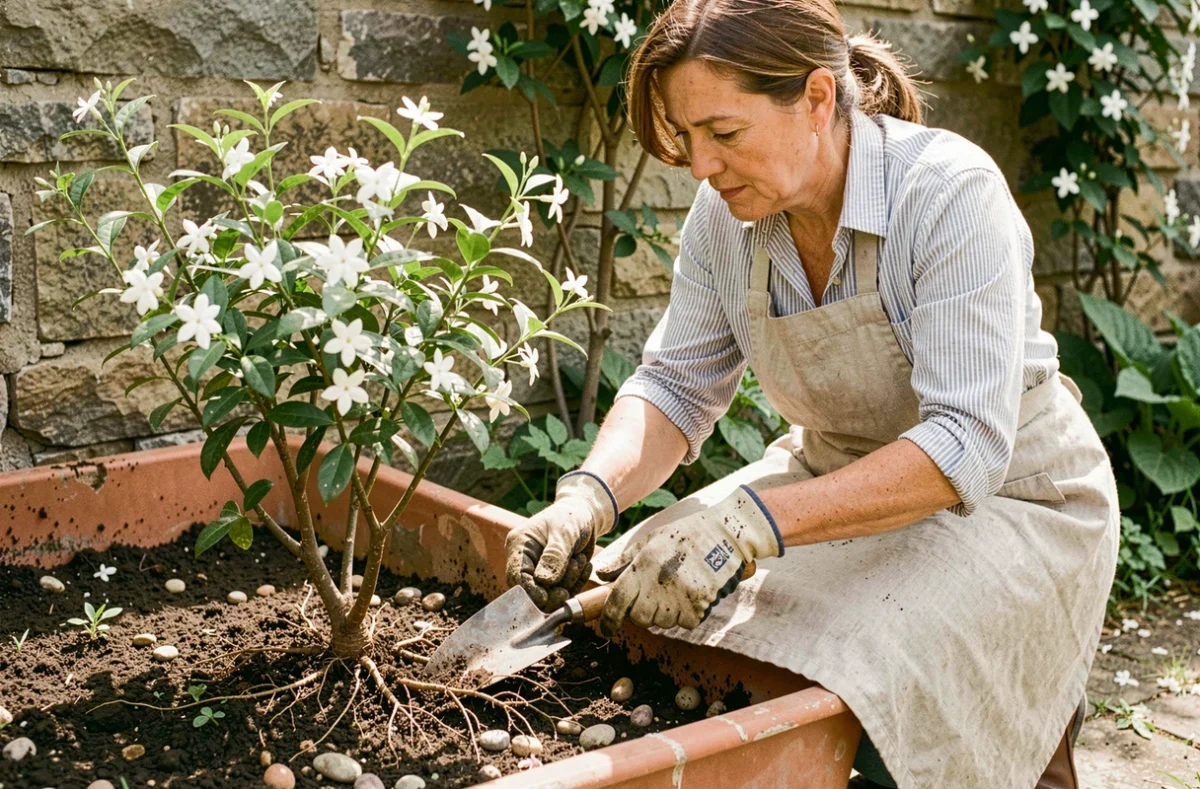
The planting hole affects growth during the first few years. For jasmine planted in the ground, digging a hole at least twice the volume of the root ball gives the roots loose soil to grow into from the start.
The bottom of the hole must remain permeable. In clay soil, breaking up the hard layer at the bottom with a digging fork prevents the hole from becoming a basin that holds water. A layer of gravel or pozzolana a few centimetres deep at the bottom improves drainage.
Suitable growing medium and soil amendments
Jasmine tolerates a range of soils, but thrives in a well-draining mix that is slightly acidic to neutral. A blend of garden soil, planting compost and coarse sand works for most species.
Adding well-rotted compost nourishes the plant during its first few months. However, too much fresh organic matter in contact with the roots encourages pathogenic fungi, especially in damp soil. It is better to mulch the surface than to bury immature compost.
Growing jasmine in a pot: focus on volume and drainage
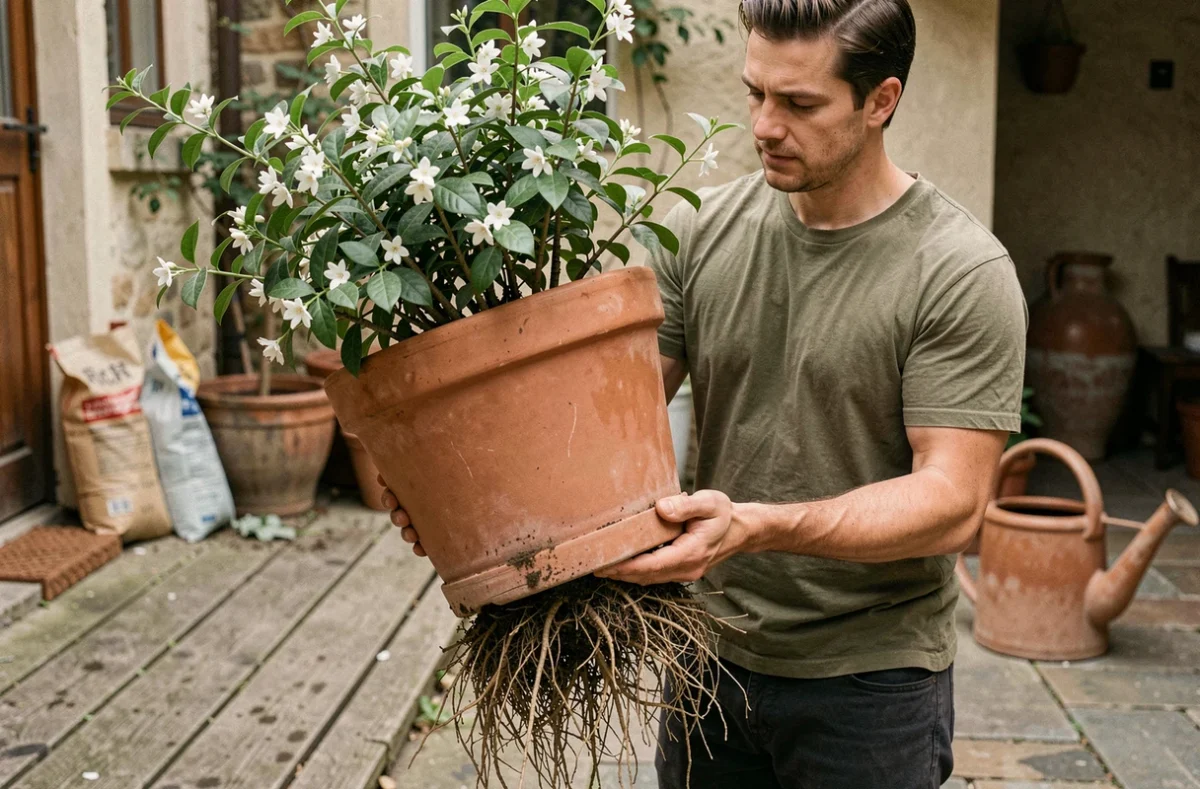
In a pot, the question of depth is different. The roots are restricted by the container, and the main risk is not insufficient depth but excess water and root suffocation.
For a young star jasmine, a pot about 40 cm deep provides enough room for the first few growing seasons. A more mature plant needs a wider, deeper container, with repotting every two to three years to refresh the growing medium and loosen the roots.
Common mistakes when growing jasmine in a pot
- Using a decorative outer pot without drainage holes: water collects at the bottom and causes root rot within a few weeks.
- Watering too often in winter: jasmine grows more slowly in cold weather, so its water needs drop significantly.
- Choosing an overly peaty all-purpose potting mix: this type of growing medium retains water and compacts over time, reducing airflow around the roots.
A mix of potting compost, perlite and fine pine bark provides a good balance between moisture retention and airflow.
Drainage and watering: protect jasmine roots all year round
Standing water is the leading cause of jasmine death, whether it is grown in a pot or in the ground. Well-drained soil allows the roots to breathe between waterings and limits the spread of fungal diseases.
In summer, deep but infrequent watering encourages roots to grow down in search of residual moisture. Light, daily watering has the opposite effect: roots stay near the surface and the plant becomes dependent on a constant water supply.
In winter, reducing watering is the best way to protect the root system. Common jasmine tolerates moderate sub-zero temperatures, provided its roots are not sitting in waterlogged, icy soil. A thick layer of mulch around the base helps limit the freeze-thaw cycles that weaken shallow roots.
Choosing the right location, preparing the soil and setting a suitable watering schedule matter more than any theoretical planting depth. Jasmine with roots that can breathe in a well-draining growing medium flowers better and lasts longer than a plant set deep in compact soil.