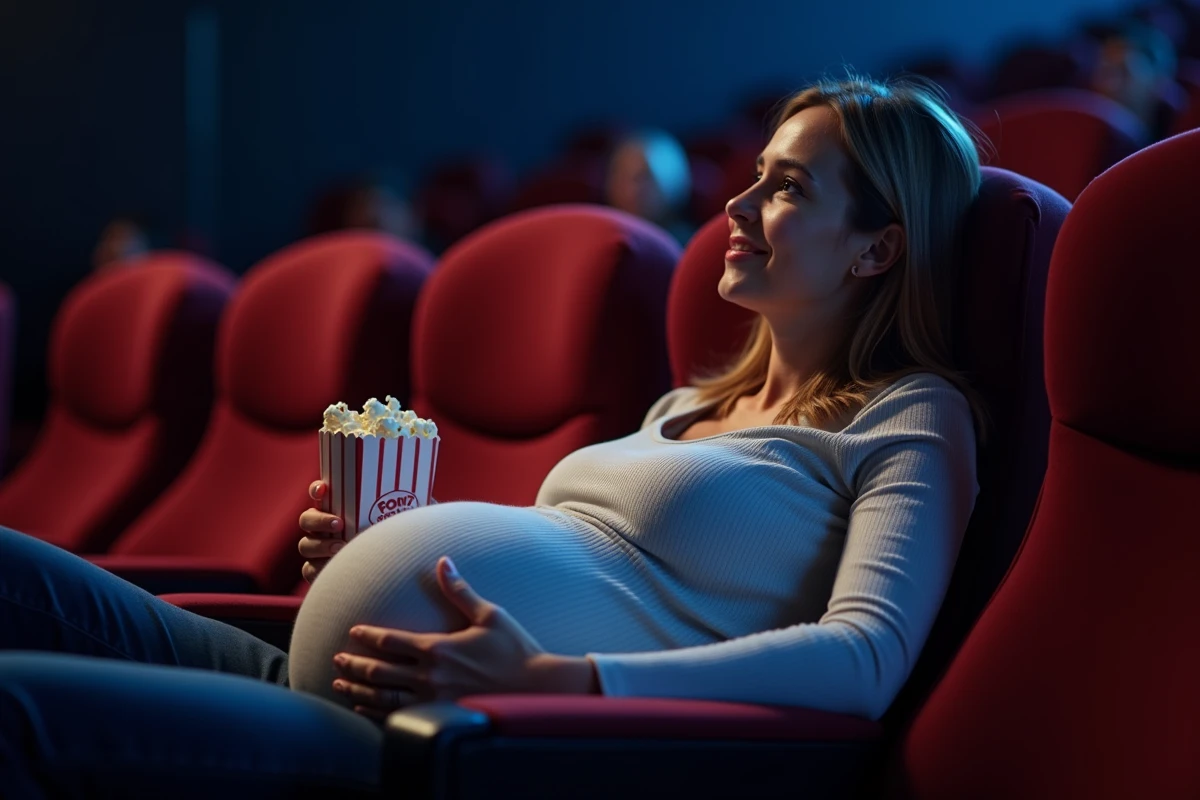
A movie session lasts on average between one hour and thirty minutes and two hours and thirty minutes. For a pregnant woman, this duration in a seated position, in a dark and sound-filled environment, raises practical questions: lumbar comfort, exposure to noise, blood circulation. Going to the cinema during pregnancy is possible in all trimesters, but the quality of the experience depends on specific technical choices before and during the session.
Sound volume in the theater and fetal exposure to noise
The least visible point, yet the most documented, concerns the sound level in movie theaters. The French decree of August 7, 2017, regarding the prevention of risks related to amplified noise and sounds imposes a limitation on the average sound level in places broadcasting amplified sound, including cinemas. Operators are required to record and retain the measured levels.
This regulatory framework does not specifically target pregnancy. However, it serves as a basis for several recommendations from maternity hospitals and scientific societies regarding noise exposure during pregnancy. From the second trimester onwards, the fetal auditory system begins to perceive external sounds, transmitted through the amniotic fluid, which partially attenuates but does not block them.
Action films, blockbusters with special effects, or immersive format screenings (like Dolby Atmos, IMAX) produce sound peaks significantly higher than the dialogues of a drama or comedy. Knowing how to discuss cinema and pregnancy what advice to apply starts with the choice of film genre and type of theater.

Physical comfort in the theater: venous circulation and lumbar posture
Prolonged sitting slows down venous return in the lower limbs. During pregnancy, blood volume increases, and the compression exerted by the uterus on the vena cava accentuates this phenomenon. Remaining still for more than an hour in a cinema seat, often reclined backward, promotes feelings of heavy legs and edema.
The lumbar posture presents a second problem. Standard seats offer a flat backrest, with no support for the lower back. In the third trimester, the natural curvature increases under the weight of the belly, making this position uncomfortable after just a few minutes.
Concrete strategies to limit discomfort
- Choose an aisle seat at the end of the row to be able to stand up without disturbing others. This seat also facilitates quick access to the restroom, which is frequent in late pregnancy.
- Bring a small lumbar cushion or a rolled-up scarf to support the lower back. Some theaters now offer lumbar cushions upon request, as part of sessions designed for pregnant women.
- Stand briefly during the session, even for a few seconds, to reactivate circulation. Flexing the ankles regularly while seated also helps limit venous stasis.
- Bring a bottle of water. The air conditioning in theaters dehydrates, and dehydration increases Braxton-Hicks contractions, these training contractions sometimes triggered by fatigue or lack of water.
Sessions adapted for pregnancy: what is available in theaters
In recent years, several networks of theaters in France and Belgium have been testing sessions specifically designed for pregnant women. The format varies according to the operators, but the principle remains similar: slightly cooler temperature, intentionally reduced sound volume, very low light but not completely off, priority access to rows with more legroom.
These initiatives remain rare and localized. They are documented in local press and communications from operators, rarely on the national websites of chains. To locate them, the most reliable method is to contact the targeted theater directly by phone or through its social media.
How to identify a suitable theater without a dedicated offering
In the absence of a labeled session, three criteria can help evaluate the comfort of a theater for a pregnant woman. The first is the width of the seat and the spacing between rows, visible in photos on the website or in online reviews.
The second is the size of the theater: a small theater offers a less aggressive sound volume than an auditorium with several hundred seats equipped with immersive sound. The third is the timing: daytime sessions during the week attract fewer people and allow for more freedom in seating.
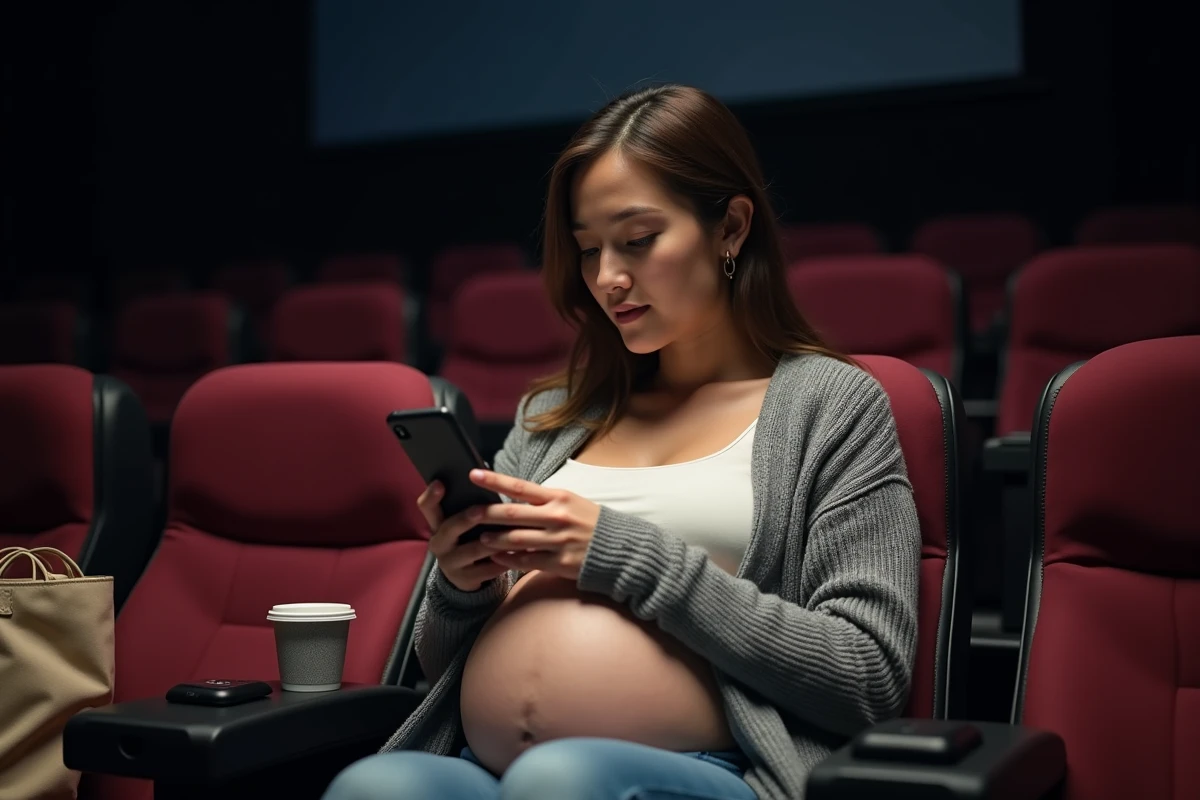
Trimester by trimester: adapting the cinema outing to the progress of the pregnancy
In the first trimester, nausea and intense fatigue are the main obstacles. The smells of popcorn or food in the theater can trigger nausea. Prioritizing morning sessions, when nausea is often less pronounced, and bringing a neutral snack (dry biscuit, fruit) reduces this risk.
In the second trimester, this period is generally the most comfortable for a session. Energy returns, the belly does not yet hinder the seated position, and the fetus begins to perceive sounds without the occasional exposure to a standard session posing documented problems.
In the third trimester, the issue of physical comfort becomes central. Frequent urges to urinate, back pain, Braxton-Hicks contractions, and difficulty finding a comfortable position limit the tolerable duration of immobility. Opting for a short film (less than one hour and forty minutes) and a seat with direct access to the aisle transforms the outing.
Going to the cinema during pregnancy does not require specific medical advice in the absence of complications. The main variable remains personal comfort, which evolves week by week. Keeping a lumbar cushion in the bag, aiming for small theaters during the day, and avoiding the most powerful sound formats is enough to turn an ordinary outing into a real break.