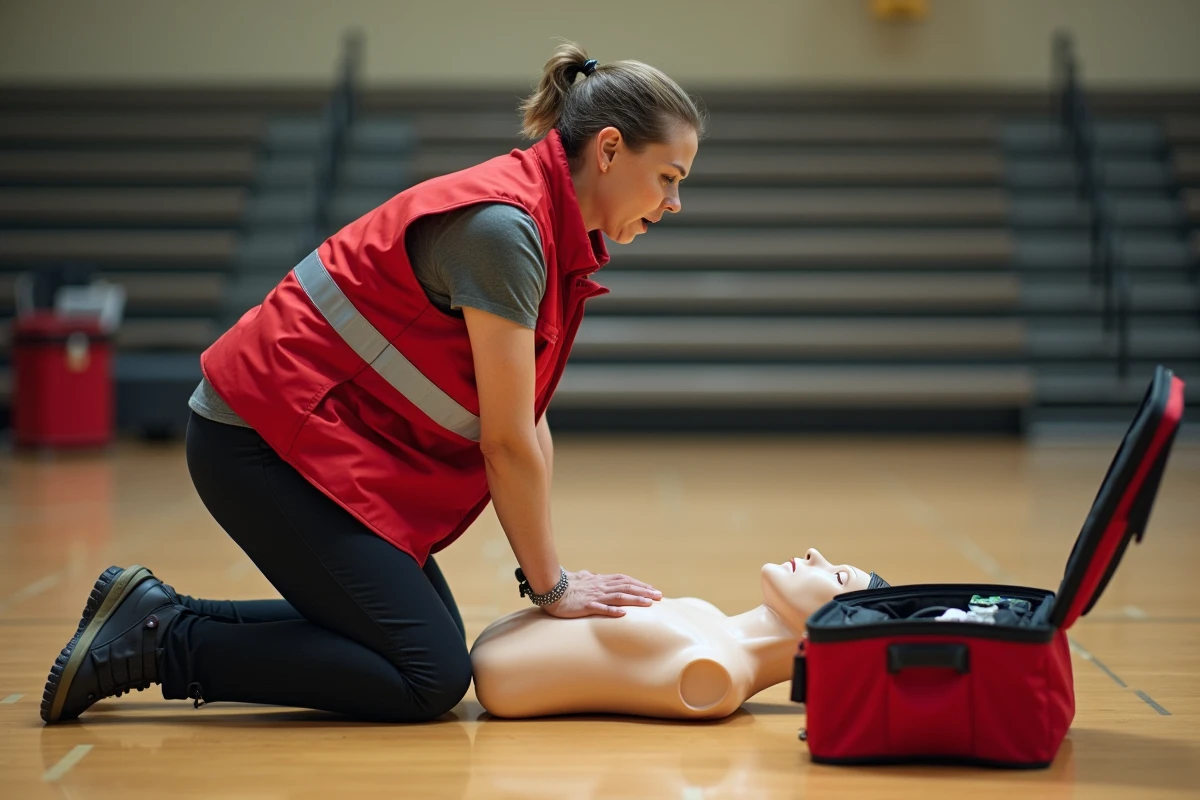
The three P’s of first aid, Protect, Prevent and Alert, Rescue, form the foundation of any intervention in the event of an accident or a medical emergency. This ordered sequence structures the witness’s reaction to avoid secondary accidents and optimize the care of the victim before the arrival of specialized teams.
Prevention and preparation: a P in its own right in the rescue chain
Since the revision of the national PSC1 framework published by the Ministry of the Interior in 2021, the official pedagogy emphasizes a dimension that has long been relegated to the background: prevention is an integral part of the rescue chain. Anticipating danger, identifying exits, and preparing an emergency kit are no longer just common sense at home. These reflexes are now taught alongside the recovery position or cardiopulmonary resuscitation.
The French Red Cross recommends assembling an emergency bag containing water, medications, copies of identity documents, and a flashlight. This advice targets both everyday accidents and extreme weather events (floods, heatwaves, wildfires). Integrating first aid gestures to adopt into a comprehensive preparation approach changes the citizen’s role: they shift from being a spectator to being an actor in their own safety.
In practical terms, prevention includes simple gestures that are rarely applied:
- Regularly check the expiration date of the supplies in your first aid kit, including sterile dressings and saline solution
- Identify in advance the appropriate emergency number for each situation (15 for SAMU, 18 for firefighters, 112 from a mobile in Europe)
- Locate automated external defibrillators in places you frequent daily (train station, shopping center, gym)
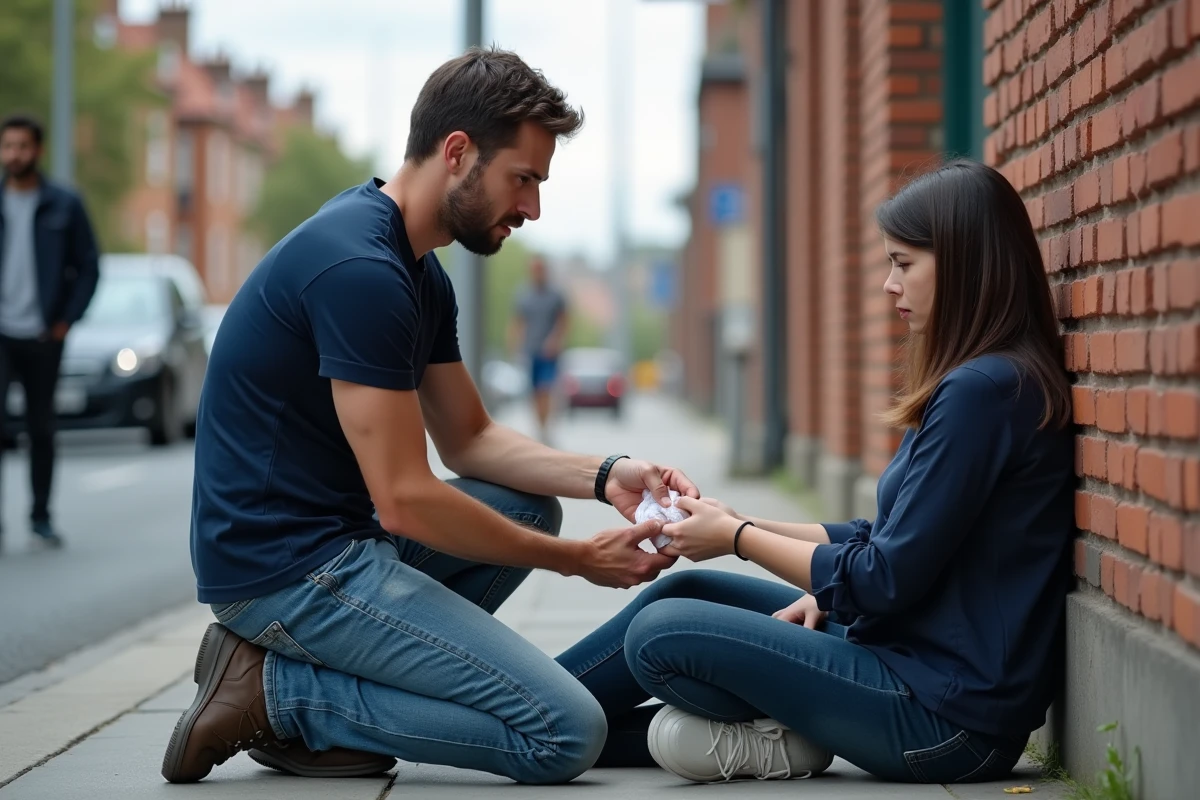
Protecting the victim and the accident scene without putting yourself in danger
Protecting is the first operational reflex once on the scene. The objective is twofold: eliminate or mark the danger to prevent a secondary accident and ensure your own safety. An injured witness becomes an additional victim and complicates the work of professional rescuers.
On the road, this means turning on hazard lights, wearing a high-visibility vest, and placing a warning triangle ahead of the accident. In a home, cut off the power at the circuit breaker before touching an electrified person. In a natural setting, assess the stability of the ground or the presence of toxic smoke.
When to move a victim of an accident
The basic principle remains to never move a victim unless there is an immediate danger (fire, risk of explosion, collapse). Any awkward mobilization of a person suspected of having a spinal injury can worsen a spinal cord injury. If evacuation is necessary, the technique of pulling by the ankles or wrists while maintaining the head-neck-trunk axis limits risks, but it remains a last resort gesture.
Alerting emergency services: the information to convey
Alerting is not just about dialing a number. The quality of the information relayed to the dispatcher determines the speed and relevance of the response.
During the call, four elements are expected by the dispatch center:
- The precise location (address, floor, landmark, GPS coordinates if you are in an isolated area)
- The nature of the problem: road accident, cardiac distress, fall, drowning
- The number of victims and their apparent condition: conscious or unconscious person, breathing present or absent, visible bleeding
- The actions already taken: placing in the recovery position, applying pressure to a wound, using a defibrillator
Never hang up first. The dispatcher can guide you by phone to perform a first aid gesture while waiting for the team to arrive. The phone then becomes a full-fledged rescue tool, not just an alert channel.
Rescue: first aid gestures adapted to the victim’s condition
The third P is activated only after securing the scene and alerting the emergency services. The assessment of the victim determines the appropriate action.
Unconscious person who is breathing
Gently tilt the head back to clear the airways, then place the victim in the recovery position (PLS). This position prevents the tongue from falling back into the throat and allows for the evacuation of any vomit. The body is stabilized on its side, with the mouth open facing the ground.
Unconscious person who is not breathing
Immediately begin chest compressions: hands stacked in the center of the chest, arms straight, at a steady rhythm. Alternate with breaths if you are trained. Every minute without chest compressions reduces the chances of survival. Using an automated external defibrillator, if available, significantly increases the effectiveness of resuscitation.
First aid adapted for a child or infant
Chest compressions on a child are performed with the heel of one hand. For an infant, two fingers are sufficient. Breaths cover both the mouth and nose of the baby. This adaptation of force and technique is why PSC1 training includes a specific module on pediatric rescue gestures.
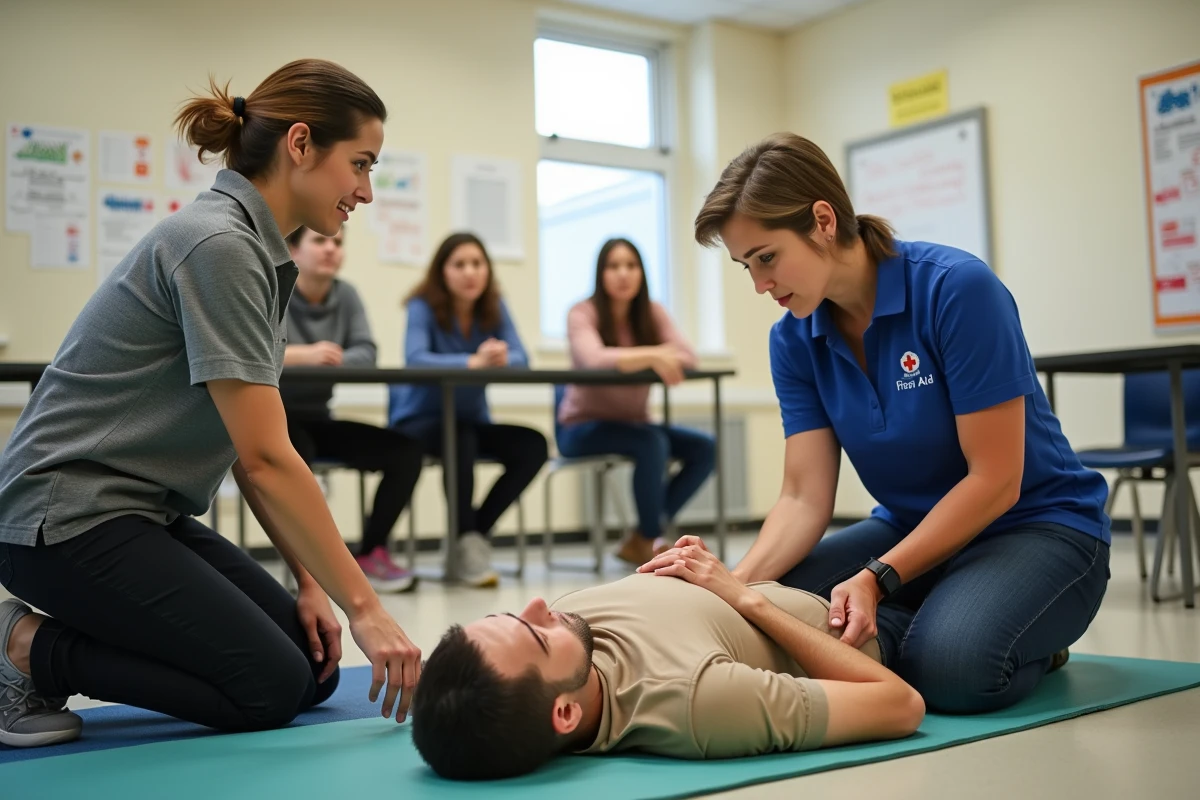
First aid training: where and how to train for PSC1
The PSC1 training, lasting about seven hours, remains the reference for acquiring first aid skills in France. It is provided by accredited civil security associations: Red Cross, Civil Protection, Red Crescent, Order of Malta, among others.
The cost varies depending on the organization, but some local authorities offer free sessions, particularly for young people and school staff. The “Life-Saving Gestures” (GQS) training, which is shorter, offers a two-hour introduction for those with limited time.
The revised PSC1 framework now includes practical scenarios related to climate and technological risks. The training is no longer limited to domestic emergencies: it also prepares for collective emergency situations, reinforcing the link between first aid and citizen resilience in the face of crises.
Mastering the three P’s in order (prevent and prepare, protect and alert, rescue) transforms a passive witness into the first link in the survival chain. Only guided practice during training allows these reflexes to be anchored in muscle memory and retrieved under stress.