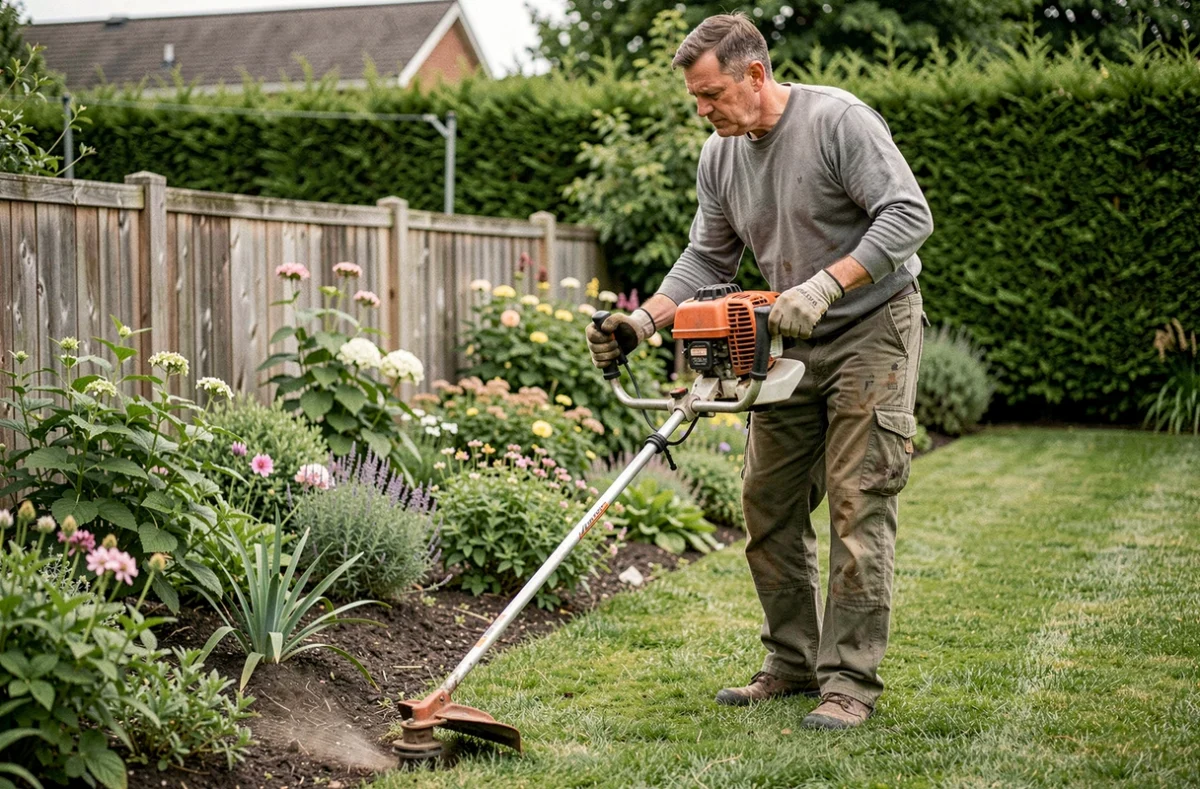
The thermal string trimmer remains the tool of choice for large gardens or uneven terrain where neither an electric extension cord nor the battery life is sufficient. Choosing the right model involves going beyond a simple comparison of displayed power: the type of engine, the cutting system, the actual noise level, and especially maintenance requirements determine long-term satisfaction.
2-stroke engine and fuel-oil mix: what maintenance really involves
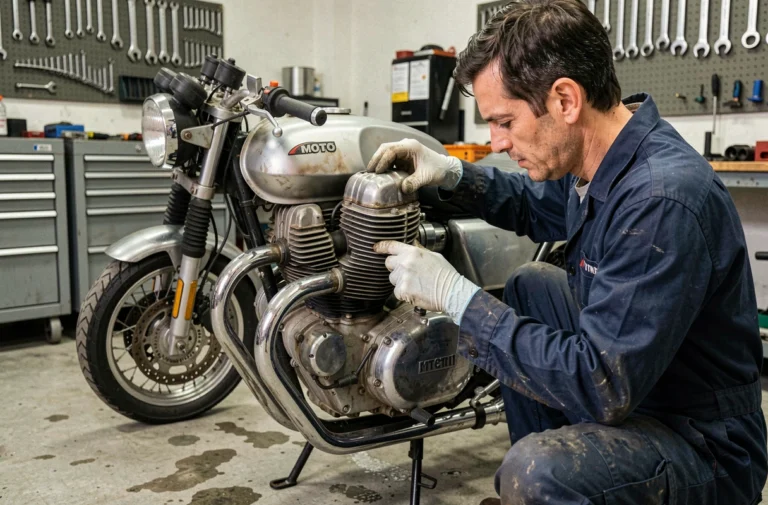
Most consumer thermal string trimmers come equipped with a 2-stroke engine. This technical choice requires preparing a fuel-oil mix in the proportions indicated by the manufacturer. An approximate dosage accelerates cylinder fouling and shortens the engine’s lifespan.
Routine maintenance is not limited to fuel. The air filter, spark plug, muffler, and gear head must be checked regularly. Winterizing, often neglected, may require completely draining the tank or using a fuel stabilizer to prevent the mixture from oxidizing.
Online comparisons on coupebordurethermique.fr detail these maintenance differences between models, a criterion rarely highlighted in the product sheets of general retailers.
Alkylate fuel: a little-known alternative to SP95
Alkylate fuel, designed for small 2-stroke engines, contains much fewer aromatic compounds and no ethanol. For a tool used at face level, where the user directly inhales the exhaust gases, this difference in composition is particularly significant.
Classic SP95 contains ethanol, which can damage certain seals and hoses on small engines. Alkylate reduces this risk and facilitates restarting after long periods of storage. However, its price per liter is significantly higher.
Before switching to this type of fuel, check compatibility in the manufacturer’s manual. Not all manufacturers provide explicit recommendations on this, and field feedback varies on the actual gain in engine longevity.
Noise level of a thermal string trimmer: reading the right indicators
A product sheet that claims an “quiet” device without specifying what measurement it refers to can be misleading. Two distinct indicators exist on serious technical sheets:
- Sound pressure, expressed in decibels (dB(A)), corresponds to the noise perceived by the user at normal operating distance.
- Guaranteed sound power, also in dB(A), measures the total acoustic energy emitted by the machine. This value is systematically higher than sound pressure.
- The gap between these two figures can be very significant. Comparing the sound pressure of one model to the sound power of another completely skews the ranking.
For use in residential areas, sound pressure remains the most relevant criterion, as it reflects the actual exposure of the user and the neighborhood.
Cutting head and safety: nylon line, plastic blades, and risk of projection
Nylon line remains the most common cutting system. Its diameter determines the ability to cut through dense grasses or tough weeds. A line that is too thin breaks quickly in difficult areas, while a thick line puts more strain on the engine.
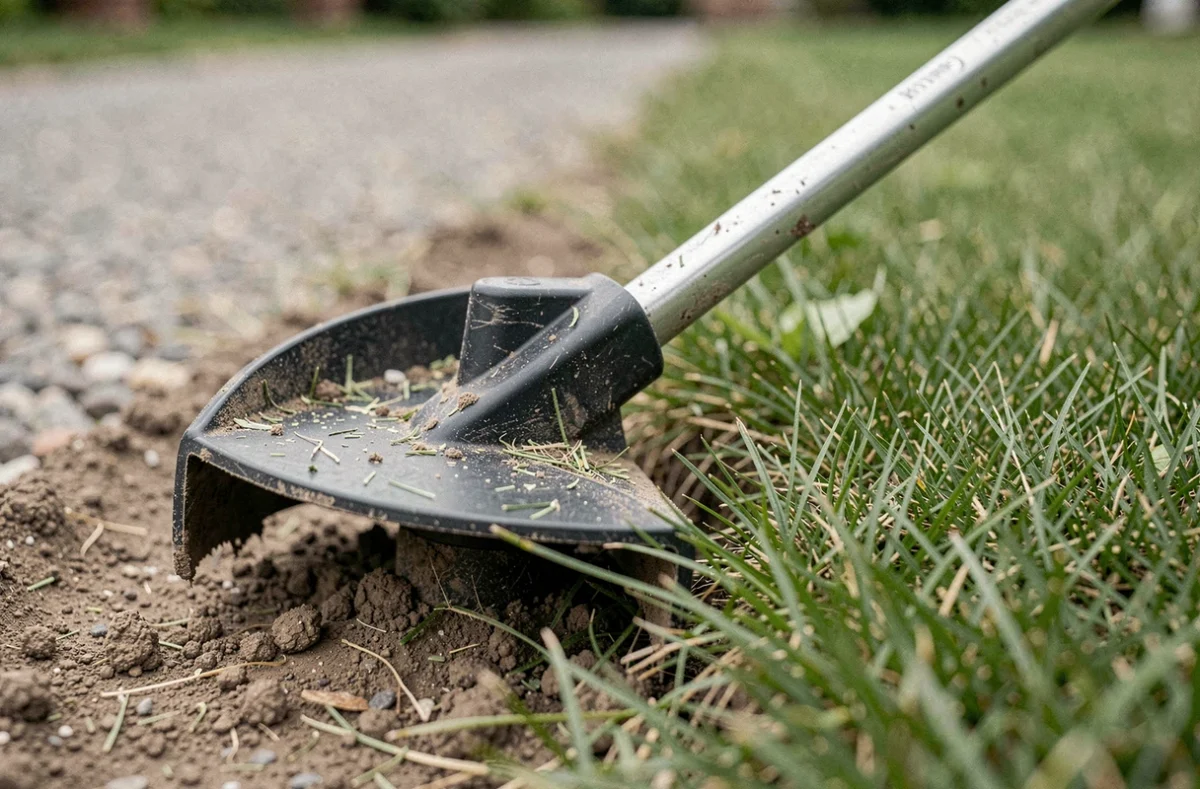
Some models replace the line with a rotor equipped with small plastic blades. This system limits the gradual wear of the consumable, but the risk of projection remains the same regardless of the type of head. Stones, pieces of glass, sticks: any debris on the ground can be propelled at high speed.
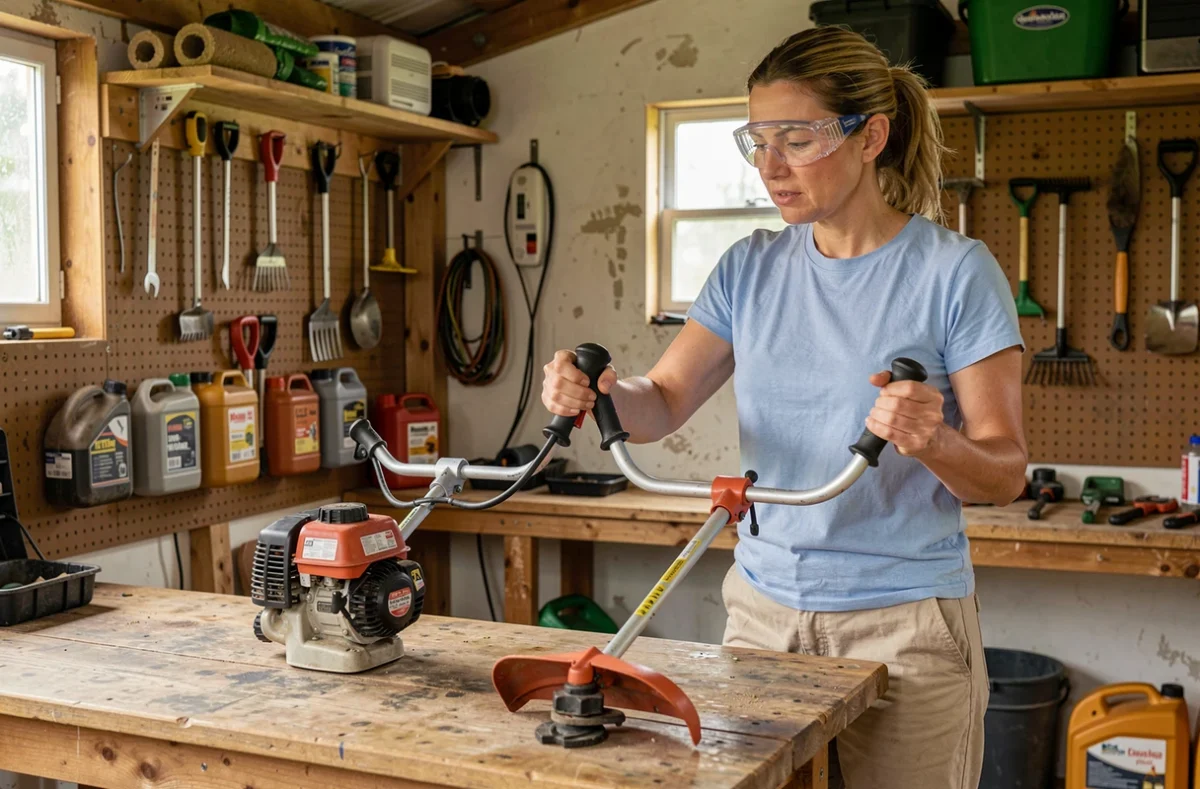
Field recommendations emphasize a point often treated as secondary in buying guides:
- Always remove stones, debris, and branches from the cutting perimeter before starting.
- Wear protective glasses, gloves, covering clothing, and closed shoes.
- Check the condition of the protective guard before each use. A cracked or poorly secured guard no longer fulfills its function.
These precautions apply to all string trimmers, but the power of a thermal engine amplifies the projection speed compared to an entry-level electric model.
Line, autonomy, and terrain: adapting the thermal model to the garden area
A thermal string trimmer makes perfect sense on large plots where the autonomy of a battery would be insufficient and where the electric cable would become an obstacle. On a modest surface, the extra weight of the thermal engine and maintenance constraints make the tool less relevant than a corded or battery model.
The choice of model also depends on the nature of the terrain. A sloped garden, borders along walls, or wet areas at the back of the plot require more from the ergonomics of the device. The total weight, mass distribution on the handle, and the presence of a support harness become decisive criteria for extended sessions.
The thermal string trimmer is not a default choice: it is a specialized tool whose relevance depends on the match between the area to be maintained, the frequency of use, and the willingness to ensure regular mechanical maintenance over the long term. Without this last condition, lithium-ion batteries today offer performance that covers the majority of residential gardens.