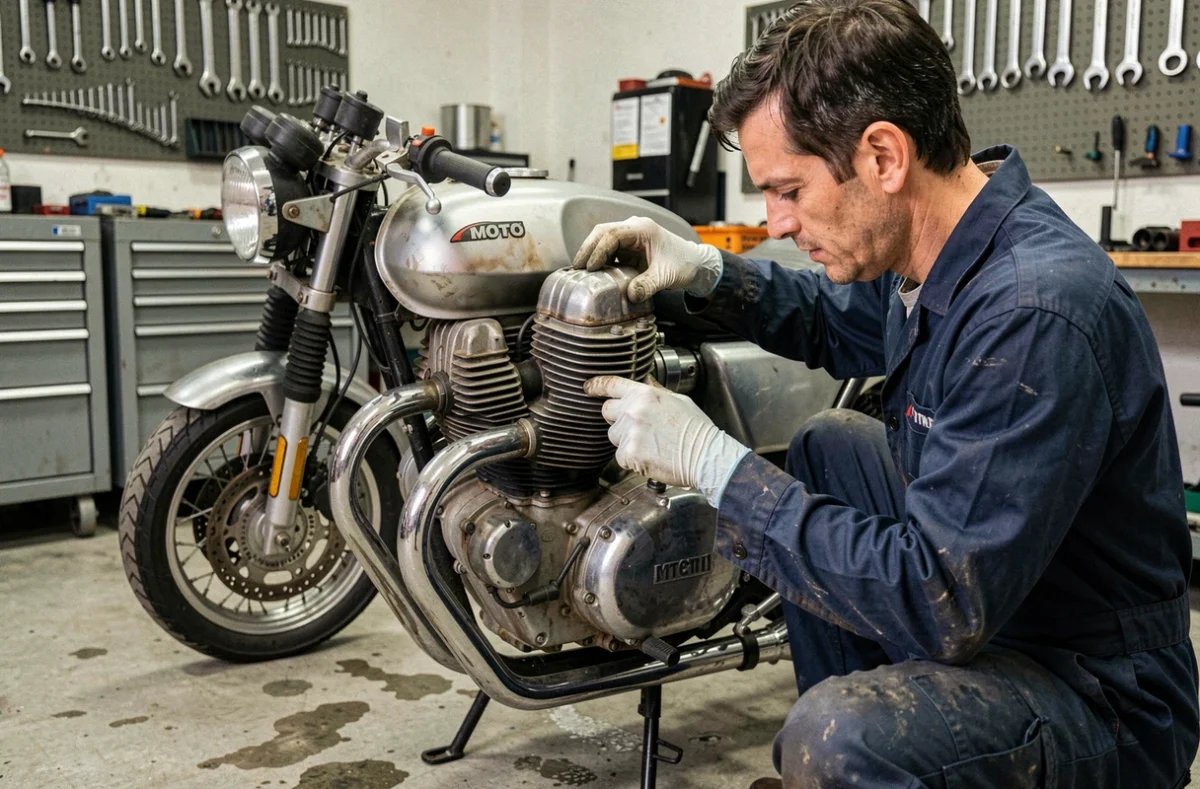
Your Moto Guzzi V85 TT overheats to the point of becoming uncomfortable when stopped in the city, especially in summer. This phenomenon is not a design flaw: it directly results from the air cooling system that equips this motorcycle, including the most recent versions. Understanding this mechanism allows you to adapt your riding habits and maintenance to limit temperature rise.
Air Cooling of the V85 TT: What It Changes in Daily Use
Unlike motorcycles equipped with a liquid cooling circuit, the V85 TT dissipates the heat from its V-twin engine solely through the airflow passing over the cylinder fins. As long as the motorcycle is moving at a steady pace, the system works well.
The problem arises as soon as this airflow decreases. Prolonged red lights, traffic jams, waiting in line at tolls: without airflow, the engine temperature rises quickly. This is not a malfunction, but a normal behavior for an air-cooled engine.
Have you noticed that the heat primarily rises around the legs and the tank after a few minutes of stopping? It is exactly this lack of ventilation that causes it. A detailed guide on Moto Guzzi V85 TT overheating issues also explains the role of the crankshaft sensor and electronic management in these episodes of excessive heating.
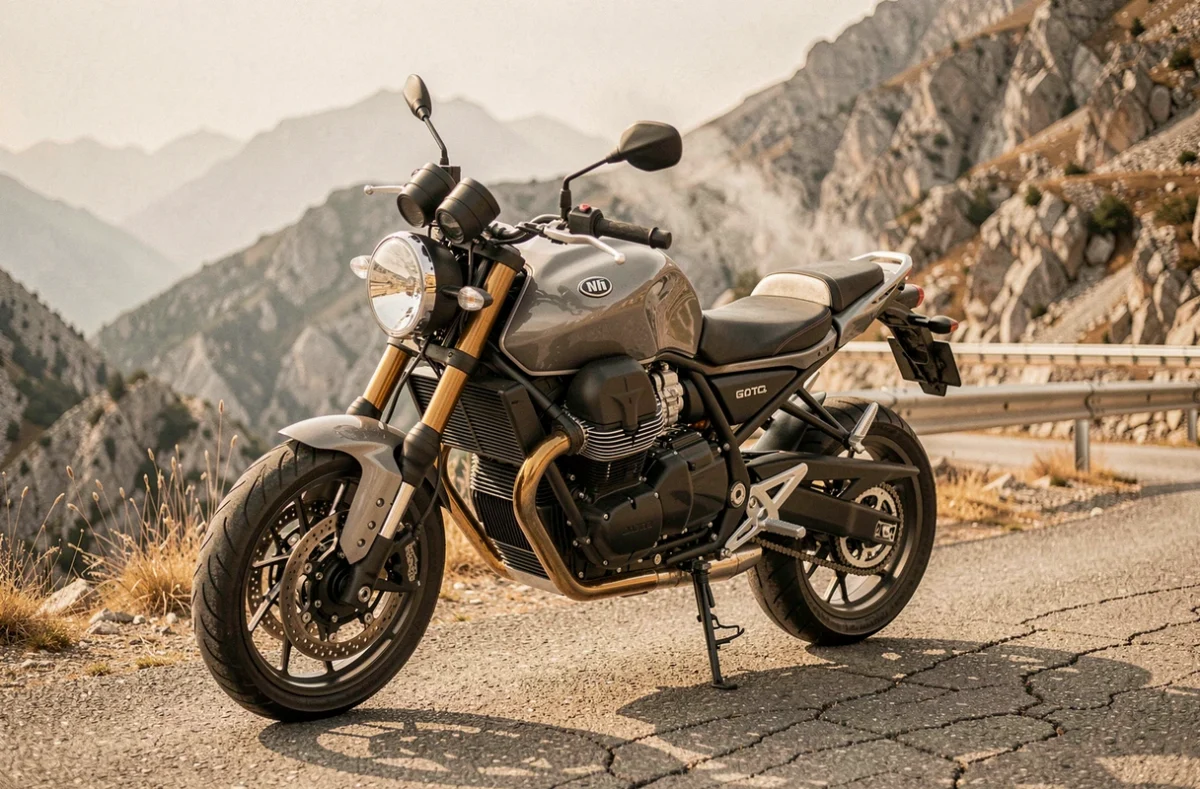
Adapting Your Riding in the City to Limit Overheating
The first preventive measure costs nothing: it concerns your riding habits. Avoiding long periods of idling remains the most effective action for an air-cooled engine.
Turn Off the Engine Instead of Waiting
If you know that the stop will last more than a minute (level crossing, delivery blocking the street), turn off the ignition. Letting the engine run in neutral without moving does not produce any cooling. Restarting puts less strain on the engine than prolonged overheating.
Favor a Smooth Route
In urban areas, taking a detour of a few hundred meters via a clearer road is often better than a direct route through a congested center. Steady progress at a moderate speed is enough to maintain proper airflow over the fins.
On the highway or in the countryside, this issue is hardly a concern. The problem remains concentrated in urban and suburban use, especially during intense summer heat.
Engine Maintenance and Oil: Important Checks
Air cooling makes the role of engine oil even more strategic than on a liquid-cooled motorcycle. The oil absorbs a significant portion of the internal heat from the engine and transfers it to the crankcase, where it dissipates.
- Check the oil level every two to three weeks if you ride regularly. Some V85 TT owners report higher than average oil consumption, particularly on models prior to 2021.
- Adhere to the oil viscosity recommended by the manufacturer. Oil that is too thin loses its thermal protection properties faster, while oil that is too thick hinders circulation in the conduits.
- Replace the oil filter at every oil change, without waiting for two cycles. A partially clogged filter reduces flow and degrades internal cooling.
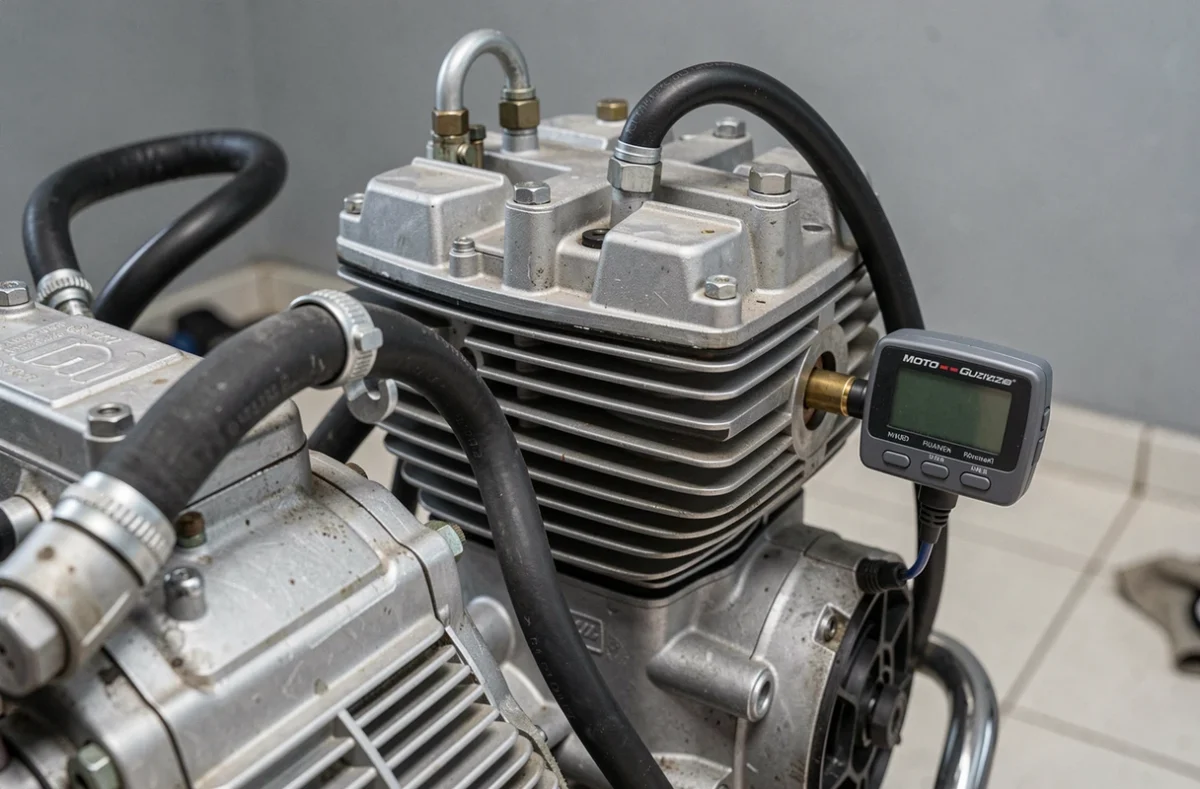
Neglected maintenance does not immediately cause dramatic overheating. The risk is more insidious: accelerated wear of internal components, hot rattling noises, and a gradual degradation of performance.
Model Year of the V85 TT and ECU Update: A Often Overlooked Point
Not all V85 TT models are equal when it comes to heat. The 2024 version introduced a significant engine evolution with variable valve timing, titanium intake valve heads, and Euro 5+ certification. These modifications change the thermal management of the engine.
Applying the same prevention strategies to a 2019 model and a 2024 model does not always make sense. ECU software updates, performed by an authorized Moto Guzzi dealer, can improve injection and idle management, which directly reduces residual heat production.
If you ride a model from before 2021, check with your dealer if an ECU update is available for your serial number. An updated engine mapping sometimes corrects unstable idling that exacerbates overheating when stopped.
Keep the Fins Clean and Clear
This advice may seem basic, but it is often overlooked. The cooling fins molded on the cylinders of the V85 TT are their only surface for thermal exchange with the outside air.
- Remove mud, dust, or insect deposits after each ride on a dirt road or dusty road. A soft brush and a low-pressure water jet are sufficient.
- Avoid attaching accessories (frame bags, guards) that directly obstruct the area around the cylinders. Any obstacle to airflow reduces cooling capacity.
- Ensure that the original side covers are properly in place and not cracked. They channel air to the fins when the motorcycle is moving.
The overheating of the V85 TT is not a fatality nor a hidden defect. It is the logical consequence of a technical choice, air cooling, which also offers mechanical simplicity and long-term reliability. Adapting your urban routes, monitoring your oil, keeping the fins clean, and checking the software version of your ECU cover the vast majority of problematic situations.